Hudson House is the red brick and Portland stone building at 2-10 Tavistock Street in Covent Garden, a street behind the market. Edwin Lutyens designed it in 1904 as the offices of Country Life magazine, and it was his first London building. It takes its name from Edward Hudson, the magazine’s founder and the architect’s great patron.
Argyll, a London serviced office company, has run the building since 2005 and reopened it in June 2026 after a £3.5 million refurbishment. This review covers how the building came about, who is in it now, what is inside, when you can visit, what a virtual office address here costs and what to check before you use it for your company.
Quick answer: Argyll sells a virtual office address at Hudson House from £130 a month plus VAT, with mail handling included, on contracts of three months or more. Using the address as your company’s registered office costs from £40 a month more, a directors’ service address £25 a month and call answering from £100 a month, according to Argyll. Scanning post costs extra at a rate Argyll does not publish, and meeting rooms are not included.
Hudson House at a glance
| Address | Hudson House, 2-10 Tavistock Street, London WC2E 7PP (also written 8 Tavistock Street) |
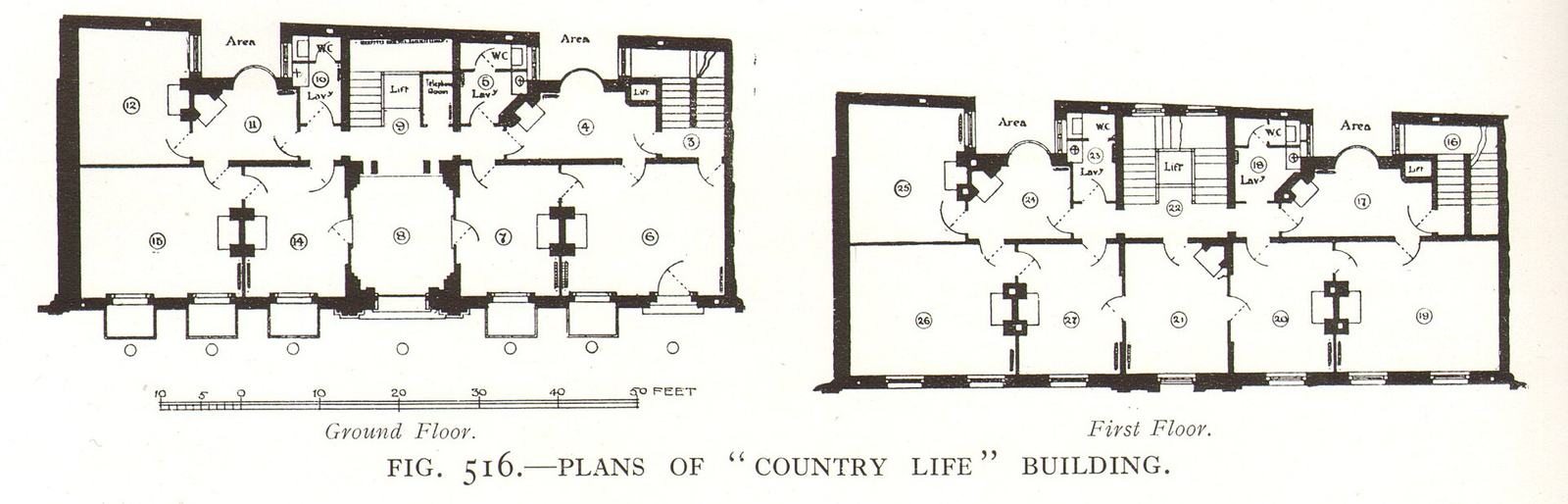
| Built | 1904-5, as the offices and printworks of Country Life |
| Architect | Edwin Lutyens; his first London building |
| Materials | Red brick and Portland stone, with a pantile roof |
| Listed | Since 5 February 1970; Grade II* on the official list entry, Grade II according to Argyll |
| Run by | Argyll, since 2005 |
| Size | Seven floors and 14,000 sq ft, with 48 private offices, according to Argyll |
| Refurbished | £3.5 million scheme, reopened June 2026 |
| Meeting rooms | Two |
| Nearest station | Covent Garden, 4 minutes’ walk according to Argyll |
How did Hudson House come to be built?
The first number of Country Life Illustrated came out on 8 January 1897. Its creator was Edward Hudson, a director of the Southwark printers Hudson and Kearns, working with the publisher Sir George Newnes. The magazine was printed in Southwark, but its editorial offices were on part of the present site, then numbered 20-21 Tavistock Street.
The weekly did well, and in 1903 Newnes arranged a building lease of a larger plot from the eleventh Duke of Bedford, for new offices where the magazine could be edited, printed and published under one roof. The Survey of London records that the job went to “the architect whose career Hudson delighted to further”. Lutyens had just built Hudson a house, Deanery Garden at Sonning, and Country Life had been publishing his work with enthusiasm.
Tavistock Street gave Lutyens his first commission for a monumental building in London, and he answered in a more classical style than he had used for the house at Sonning. The Survey calls it one of the earliest examples of his “Wrenaissance” manner, a nod to Sir Christopher Wren. He submitted the design to the London County Council in April 1904.
It did not go smoothly. Lutyens wanted the front set slightly forward over the pavement so that his main cornice could finish cleanly against the neighbouring building. Consent was refused, and refused again on an amended scheme. He complained that he had been obliged “practically to redesign” the entrance, “I fear to its detriment”, and wrote to the council’s architect that he could easily have questions asked in Parliament and “make the ‘devils own’ fuss”.
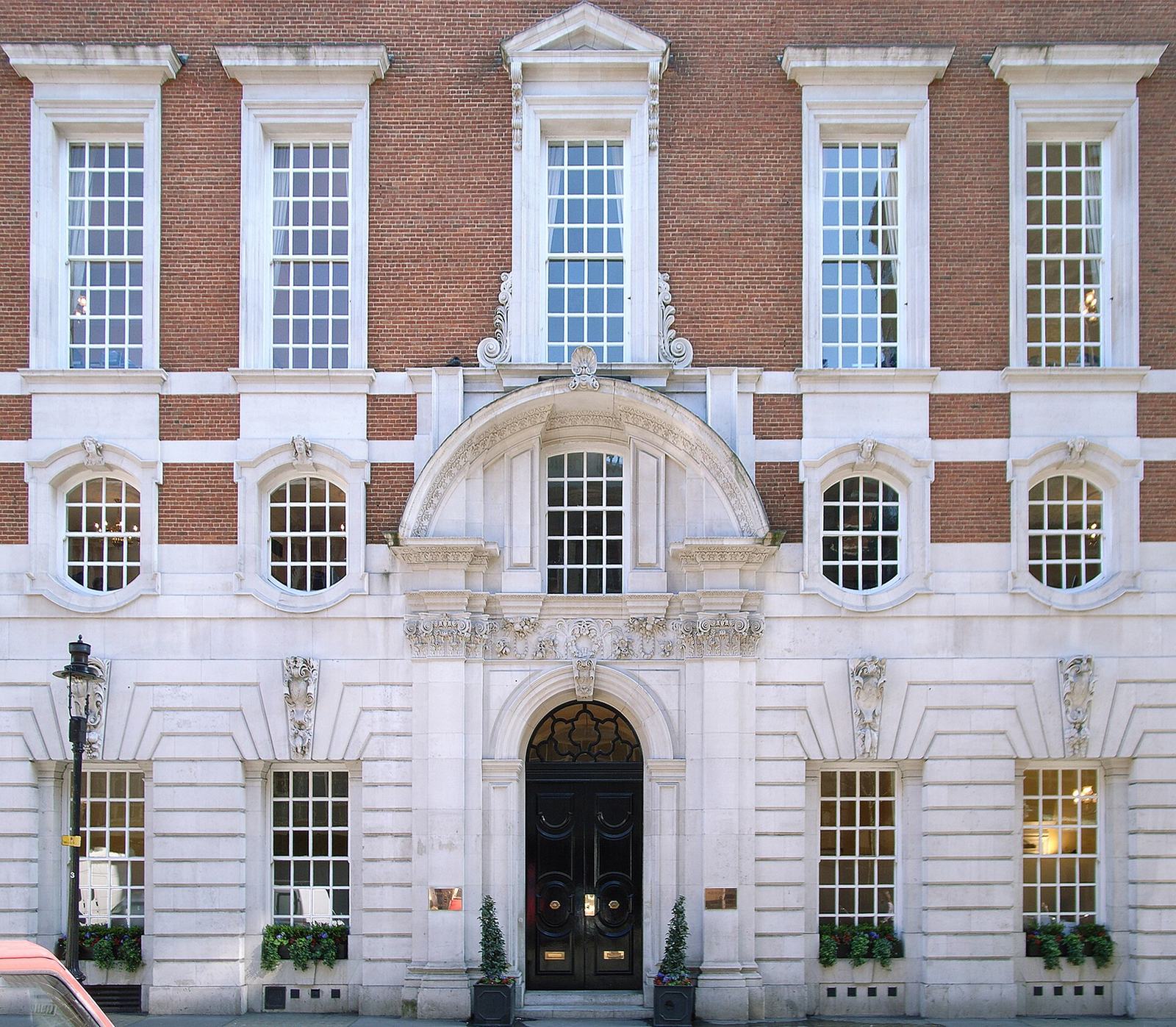
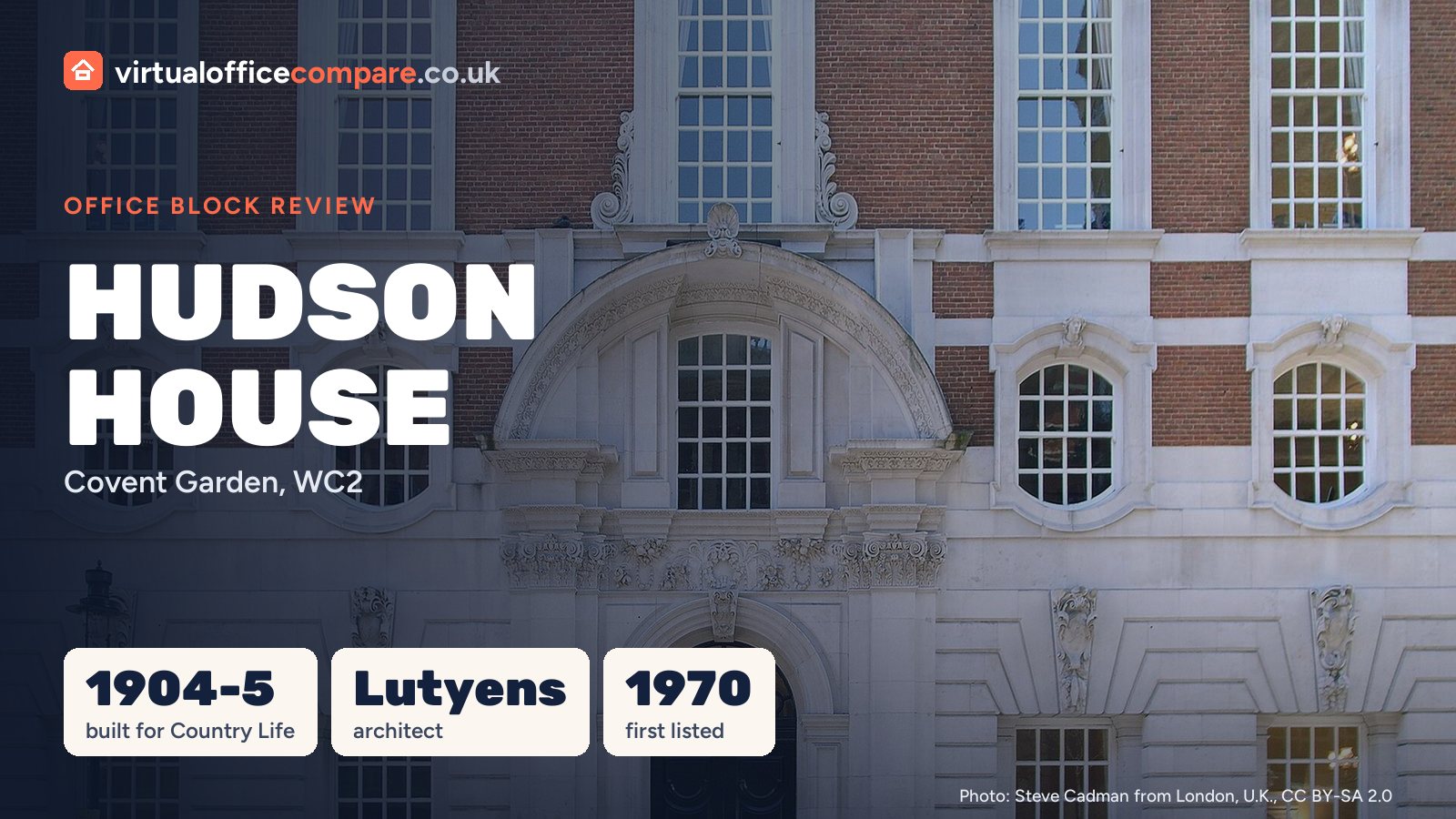
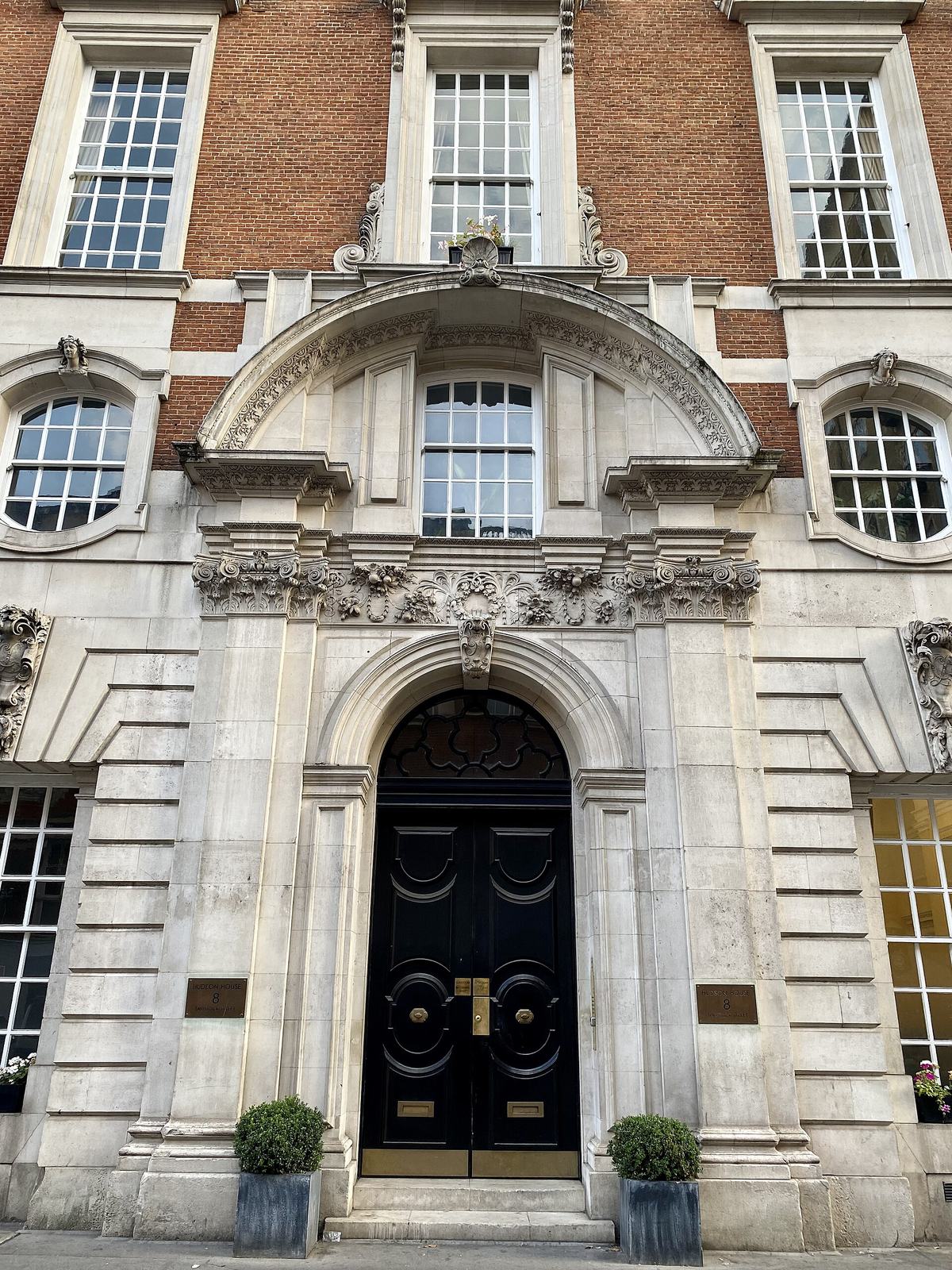
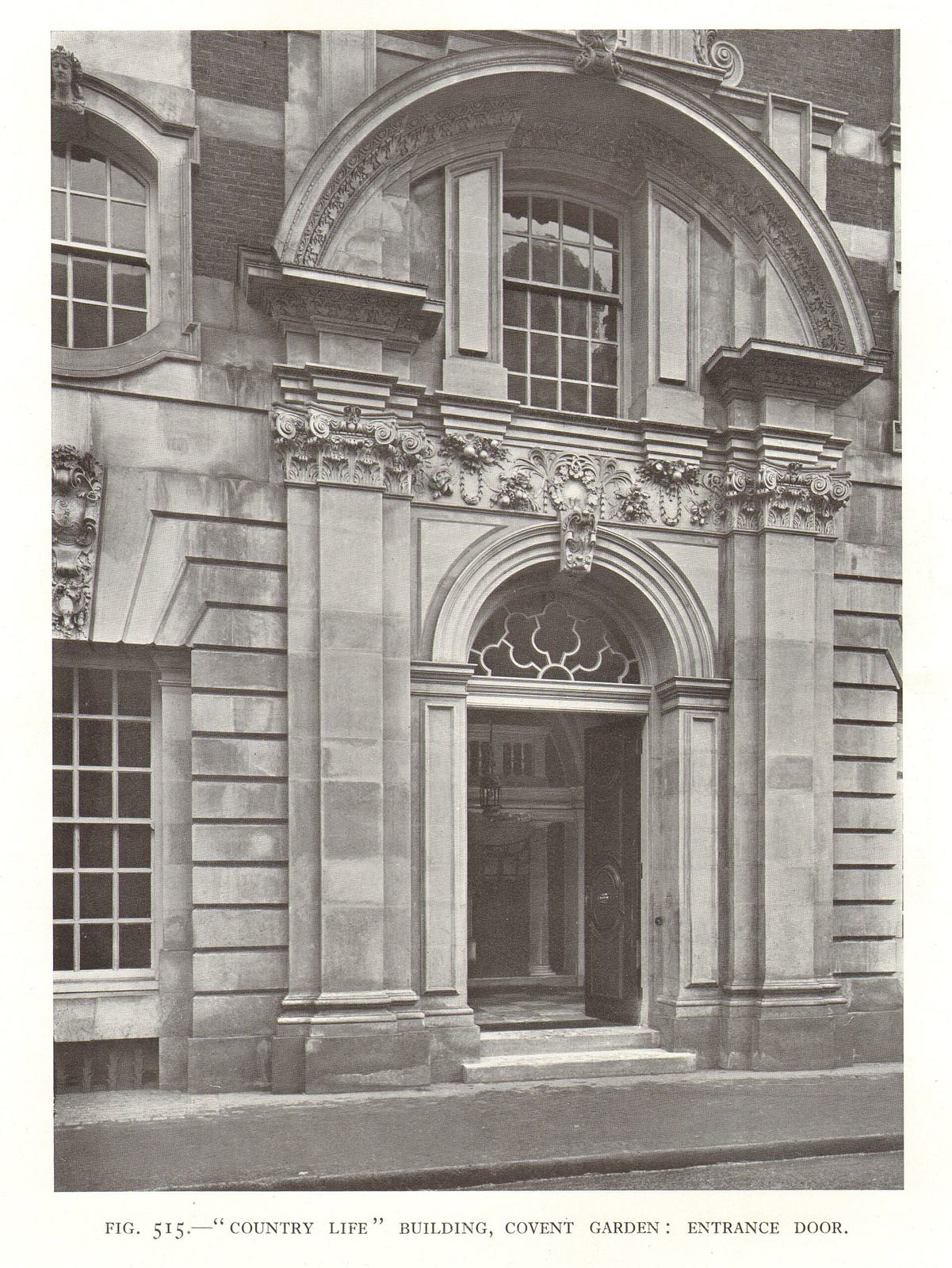
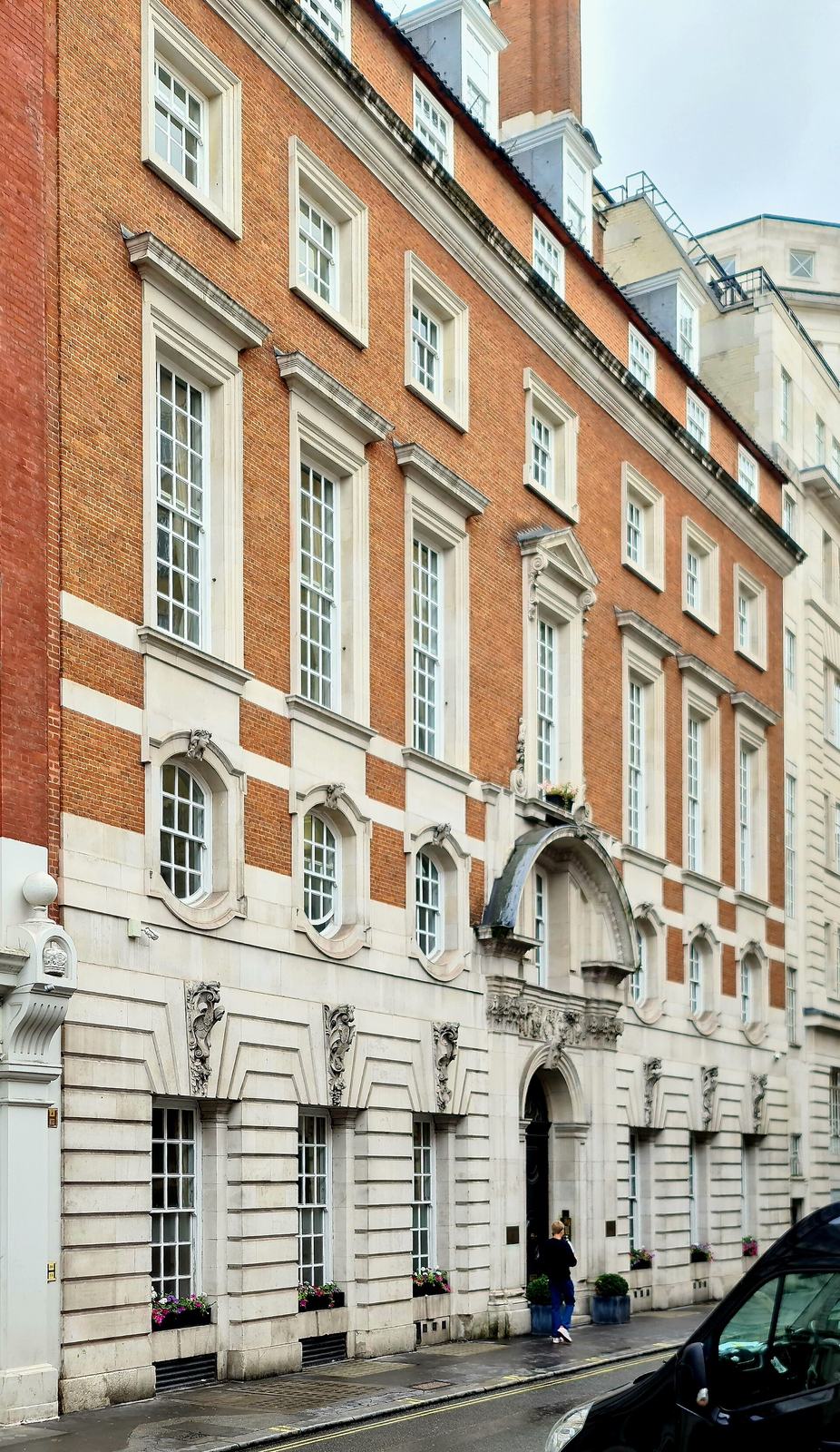
The building that resulted is four storeys high and seven windows wide, in red brick above a tall ground floor of deeply channelled stone. The central doorway sits in what the list description calls a “grandly inflated Georgian doorcase” with Corinthian pilasters, under a large broken pediment. The attic windows in the parapet and the dormers in the roof were added in 1956-57. Tavistock Street was renumbered in 1937, which is why a building put up at Nos. 17-21 is now Nos. 2-10.
Who works in Hudson House?
Country Life left long ago; the magazine is now based in Paddington. Argyll runs the whole building as serviced offices, with 48 private offices let to its customers. Argyll does not publish their names, so it is the only occupier we list.
- ArgyllServiced office company that has run Hudson House since 2005, with 48 private offices, two meeting rooms and a virtual office service.
Seen a company registered at 2-10 Tavistock Street? It is likely to be an Argyll customer, either renting one of the offices or using the address through a virtual office plan. Few do: a Companies House search on 18 November 2026 found five active companies with the postcode WC2E 7PP in their registered office address. A registered office is a legal address for official post and need not be where a company works, and you can check any company’s status, officers and filings free on the Companies House register. Our guide to how a registered office address works explains more.
What else is inside Hudson House?
Argyll says the 2026 refurbishment uncovered Lutyens’ original marble floor and vaulted ceilings on the ground floor, where the magazine’s editorial staff once worked. The upper floors were the printworks, and Argyll has given them a plainer, more industrial finish to match. The work was led by the designer Emma Turner, and the trade press reported that the building reached an energy rating of A, which the report called an impressive feat for a listed building.
For customers there are two meeting rooms, one of them called the Glasse Room, which can be booked by the hour, half day or day. Argyll also lists a lounge and breakout spaces, private video call booths, a kitchen, shower rooms and a business lounge, and says dogs are welcome. Desks in a private office start at £850 a month, which shows where the building sits in the market.
Can you walk in to Hudson House?
The front is the public part, and it is designed to be looked at. The list description notes that Lutyens composed it to be read along a narrow street and from the angle of Southampton Street, so the view from that corner is the one he intended.
Inside, the building is for Argyll’s customers and their visitors. The team is on site from 8.30am to 5.30pm Monday to Thursday and until 4.30pm on Fridays. Office customers can get in at any hour through a keyless entry system. A virtual office customer has no desk here, so a visit means booking one of the two meeting rooms or arranging to collect post in staffed hours.
How much is a virtual office at Hudson House?
Virtual office at Hudson House: who sells it and what it costs

- Business address
- All business post
- Mail forwarding
- Registered office +£40 per month
- Contracts of 3 months or more
Business address with weekly mail forwarding. Registered address from £40 a month extra, directors' service address £25, call answering from £100; scanning and meeting rooms cost extra.
Prices from each provider’s website, checked 18 November 2026.
Argyll lists a virtual office with mail handling at Hudson House from £130 a month plus VAT, on “flexible contracts for 3 months or more”. That price gives you a business address to use on your website, letterhead and cards. In Argyll’s terms a registered address is a separate product: making Hudson House your official address at Companies House costs from £40 a month on top, and a directors’ service address is £25 a month.
Post is forwarded to you weekly, or held if you are travelling. Argyll will scan and email letters instead “at an additional cost” that it does not state. Call answering, with a London number answered in your company’s name around the clock, starts at £100 a month. Meeting rooms are not part of the plan, although Argyll says virtual office customers get preferential rates.
Two things were not shown on the pages we read. Our records have a one-off set-up fee of £100 for Argyll’s virtual offices, and neither page said whether prices include VAT. Ask for both in the quote.
What should you check before using Hudson House as your business address?
The first check is the one that catches people out. Argyll’s headline price buys a business address, not a registered office. If you want your company registered here you need the registered address add-on, and if you want your home address off the director’s record you need the service address too. With both, you pay £65 a month on top of the headline price. Our guide to how a trading address differs from a registered office explains the distinction Argyll is drawing.
Then look at post. Weekly forwarding suits most small companies, but a letter from HMRC or a court can carry a short deadline, and a week in the post room uses some of it. Ask what scanning costs and whether postage is charged on top. Our guide to forwarding and scanning charges shows how these fees vary.
Check the opening hours against your plans. The team leaves at 4.30pm on Fridays, and with only two meeting rooms in the building you should book ahead if you want to see a client here. Argyll has other buildings nearby, including Central Court in Holborn, where its customers can also book rooms. Our guide to meeting clients at a virtual office covers how room hire usually works.
Expect to prove your identity before you start, as every address provider must check its customers under anti-money-laundering rules. And be realistic about what the address does elsewhere: banks ask where you really trade, HMRC asks for your principal place of business, and Google does not accept a virtual office on a Business Profile unless your own staff are there in opening hours.
Finally, cost a full year, not a month. Take the virtual office, add the registered address and service address if you need them, the set-up fee, scanning, any call answering and VAT if it applies. The contract runs for at least three months, so ask how much notice ends it and what the price is at renewal. Our guide to the full yearly cost of a virtual office shows how to lay the sums out.
Is a Hudson House address worth it?
Worth it if
- You want a Covent Garden address in a listed Lutyens building that very few other companies give.
- You work in publishing, design, media or the arts and the Country Life connection means something to your clients.
- You want your calls answered in your company’s name, which Argyll offers as an add-on.
- You would rather commit for three months than for a year.
Think twice if
- You mainly need a registered office, as that costs extra here and far cheaper registered addresses exist.
- You get urgent post, as forwarding is weekly and scanning is charged at a rate Argyll does not publish.
- You host frequent or large meetings, as there are only two rooms in the building.
- You want a Google Business Profile at the address, as Google does not accept a virtual office unless your own staff work there.
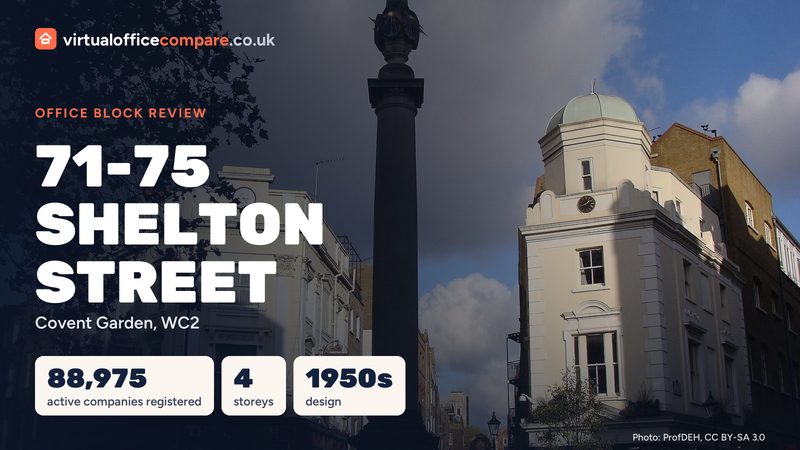
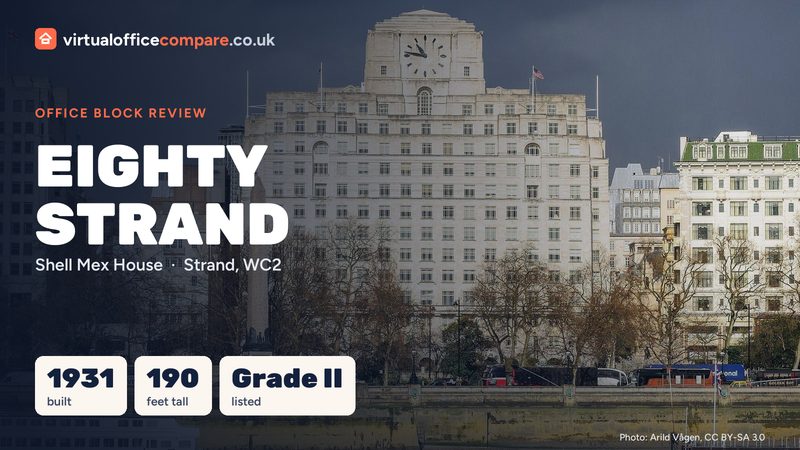
For a Covent Garden postcode sold mainly as a registered office, see our review of 71-75 Shelton Street, an address shared by a very large number of companies. For a landmark on a bigger scale nearby, see Eighty Strand.
What is the area around Hudson House like?
Tavistock Street runs along the south side of Covent Garden, just behind the market and the piazza. Only its western half, from Wellington Street to Southampton Street, is the street first laid out under that name: it was built up between 1706 and 1715 on land leased from the Dukes of Bedford. The eastern half was called York Street until 1937.
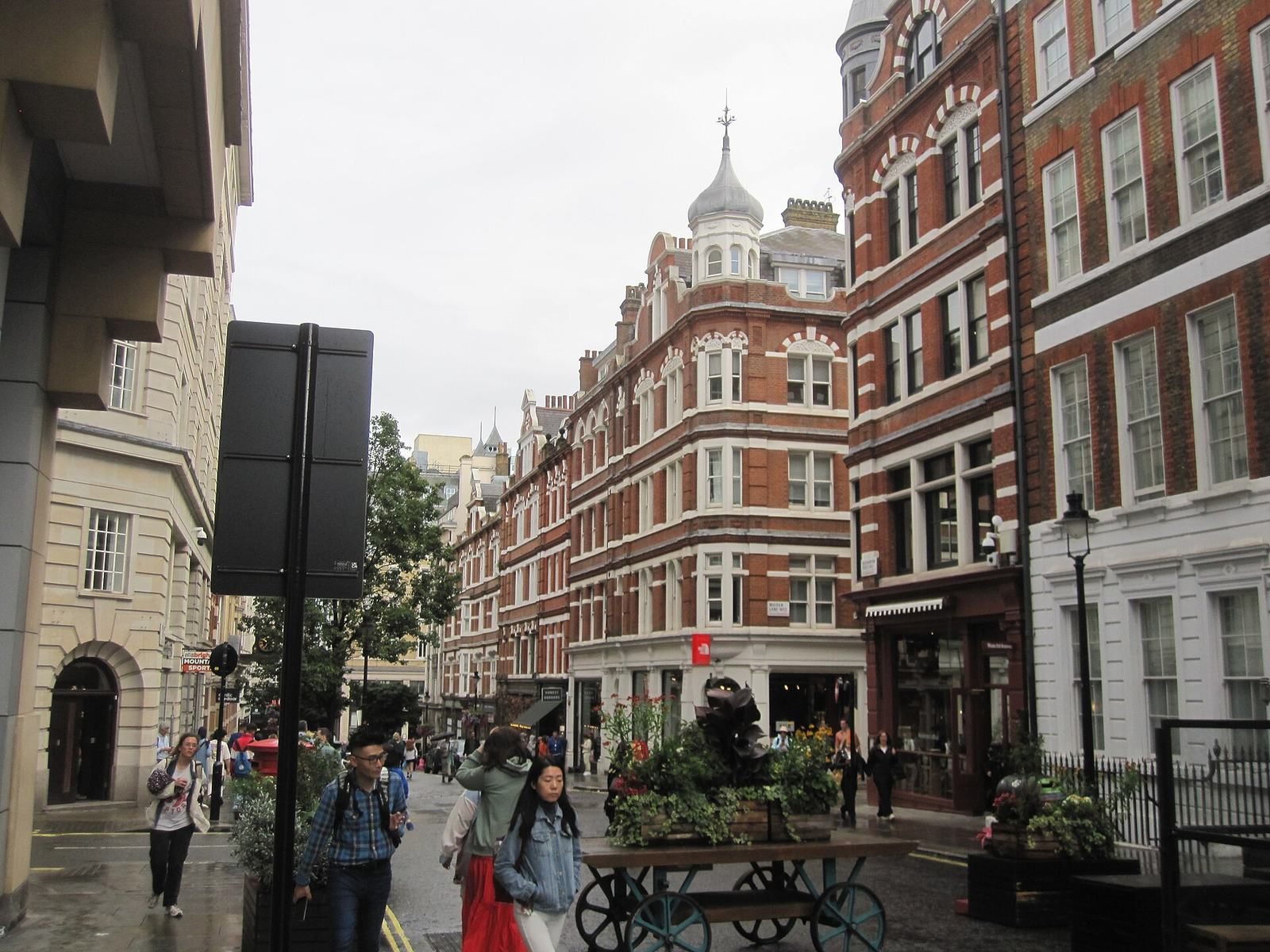
Argyll describes it as a quiet street, and the contrast with the piazza is the appeal. The theatres, restaurants and shops of Covent Garden are a short walk away.
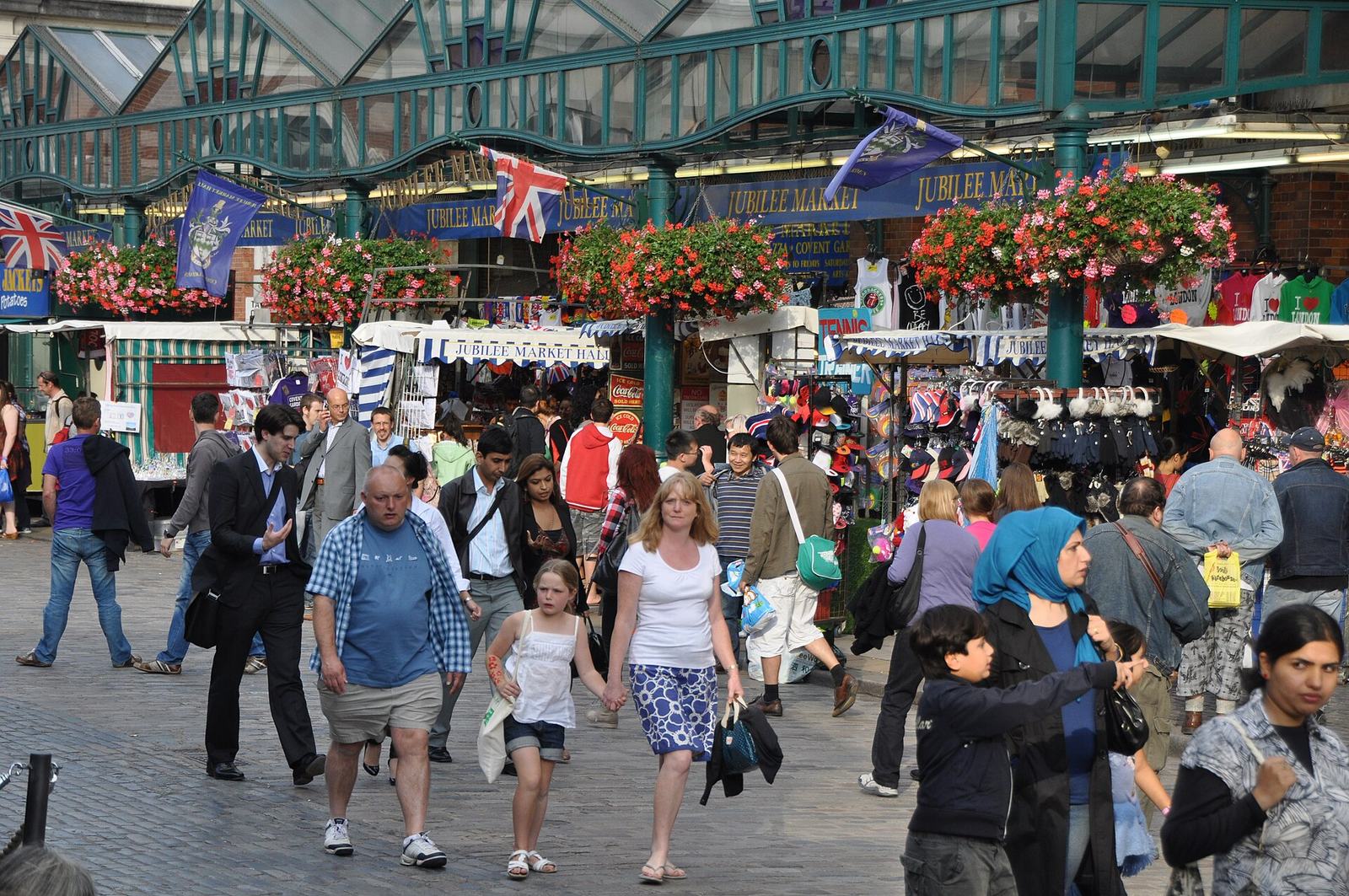
The Covent Garden virtual office page on our site lists every provider in Covent Garden, not only the famous buildings, with each plan's price checked on the provider's own website and the extras it charges for.
How do you get to Hudson House?
Covent Garden station on the Piccadilly line is four minutes’ walk away, according to Argyll. Charing Cross, for the Bakerloo and Northern lines and for mainline trains, is six minutes. Embankment, on the Bakerloo, Circle, District and Northern lines, is eight.
More photos of Hudson House
Other famous office blocks in London
Hudson House is small by the standards of this series, and older than almost all of it. For the towers and the other listed buildings, see our guide to famous London buildings that offer a virtual office address.
A landmark address is one way to look established. For every other option, virtual office addresses in London with what each plan includes lists each provider in London side by side, cheapest first, with the registered office, post handling and contract terms spelled out, from plain street addresses to the big towers.
Sources and photo credits
- Argyll: Hudson House (checked 18 November 2026)
- Argyll: virtual offices in London
- Argyll: plans for the Hudson House refurbishment, 2 March 2026
- FM Business Daily: Argyll opens the doors to Hudson House refurbishment, June 2026
- Survey of London, volume 36: Tavistock Street
- Historic England list entry 1234320, as shown by British Listed Buildings
- Wikipedia: Country Life (magazine)
- Companies House: advanced search, registered office WC2E 7PP
- TfL: Covent Garden station
- TfL: Charing Cross station
- Photo: Steve Cadman from London, U.K., CC BY-SA 2.0
- Photo: No Swan So Fine, CC BY-SA 4.0
- Photo: DiscoA340, CC BY-SA 4.0
- Photo: Lewis Clarke, CC BY-SA 2.0
- Photo: Book author: Weaver, Lawrence, 1876-1930, Public domain
- Photo: Book author: Weaver, Lawrence, 1876-1930, Public domain
- Photo: Ricardalovesmonuments, CC BY-SA 4.0